

Grains of Truth: Ayurveda, Millets, and the Misunderstood Metric of Health

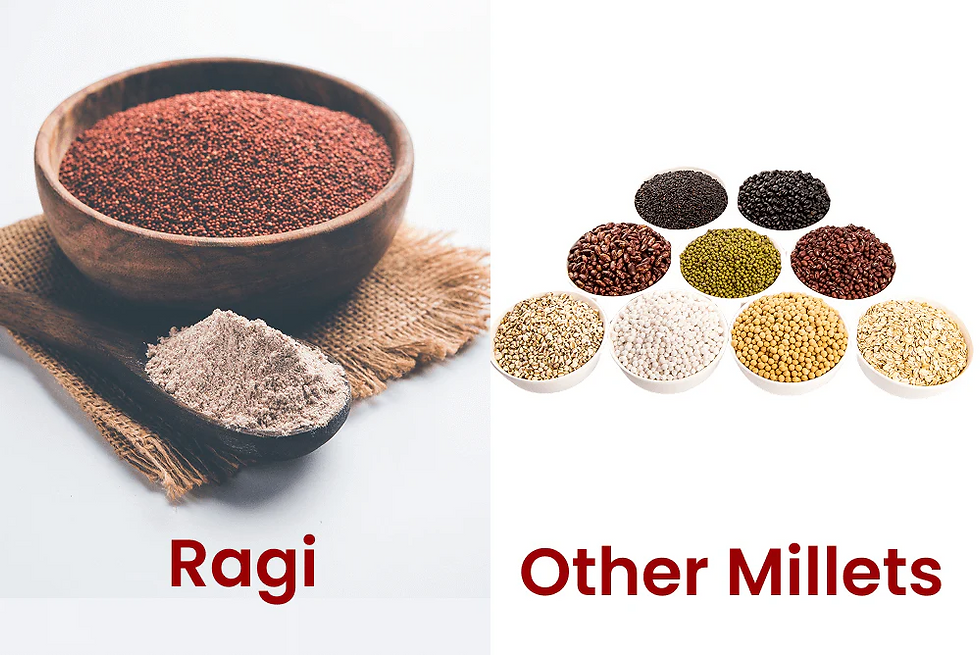
In today’s wellness climate, the appeal of ancient grains has found a new champion: millets. These hardy, nutrient-dense grains are being hailed as miracle foods. They're gluten-free, rich in fiber, and a seemingly perfect substitute for modern staples like wheat and rice. But while the enthusiasm is understandable, it also risks flattening centuries of wisdom embedded in traditional medicine systems like Ayurveda.
What if the current millet movement, instead of reconnecting us with ancient wisdom, is inadvertently misinterpreting it?
More Than a Food Swap
In Ayurveda, millets are categorized as ksudra-dhanya (literally “lesser grains”) not in a derogatory sense, but in a functional one. These grains have a specific role in restoring balance under certain conditions, especially where Kapha is aggravated (as in obesity, diabetes, or sluggish metabolism). They are not meant to be consumed endlessly or indiscriminately.
Consider this classical sloka from the Ayurvedic text Bhavaprakasa:
ksudradhanyam kudhanyam ca trinadhanyamiti smrtama |
ksudradhanyam nusanam syat kasayam laghu lekhanam ||
madhuram katukam pake ruksam ca kledasosakam |
vatakrt baddhavitakam ca pittaraktakaphapaham ||
(Bhavaprakasa, Dhanyavarga 74–75)
Translation: “Lesser grains, pseudo-grains, and grass-like grains are traditionally known to be pungent, astringent, light, and scraping. They are sweet and pungent in taste, dry in nature, and absorb moisture. They tend to aggravate Vata, cause constipation, and pacify Pitta, blood, and Kapha.”
This description offers us a framework: millets are potent, but potency must be paired with discernment. Their nature is drying, cooling, and light. If used therapeutically and temporarily, they can help reduce excess: fat, phlegm, swelling, and sugar load. But if used long-term or without awareness, they may provoke Vata, causing bloating, insomnia, dryness, and constipation.
When Food Becomes Medicine or Misalignment
Ayurveda’s brilliance lies in its contextual intelligence. The same substance that heals can also harm, it all depends on who, when, how much, and why.
This is where the contemporary conversation often loses its footing. In the rush to replace wheat and rice, we overlook that excessive use of millets, due to their inherently drying and absorbent nature, can deplete more than fat. They can draw down ojas, our vital reserve. Healing, in this lens, is not the removal of symptoms but the restoration of internal harmony.
Grains Through the Ayurvedic Lens
To appreciate how Ayurveda evaluates food, here’s a summary of several grains and their qualities, doshic effects, and practical implications:
Grain | Core Ayurvedic Qualities | Effects on Doshas | Implication |
Barley (Yava) | Astringent, sweet, dry, light, cooling, fat-scraping | Reduces Kapha; supports ulcers, diabetes | Excellent for weight management; may dry tissues if overused |
Foxtail Millet | Nourishing yet dry and heavy | Increases Vata, reduces Kapha | Useful in metabolic imbalance; should be paired with oils/spices |
Proso Millet | Similar to Foxtail | Likely similar doshic effects | Moderation advised; not suitable for Vata types over long term |
Barnyard Millet | Water-absorbing, drying | Increases Vata, pacifies Kapha and Pitta | Dries dampness and heat; can cause depletion in Vata-prone individuals |
Kodo Millet | Absorbent, cooling | Same as above | Good short-term grain for heat or swelling; avoid overuse |
Sorghum (Jowar) | Cooling, astringent, drying | Pacifies Kapha and Pitta | Supports sugar metabolism; balancing for Kapha disorders |
Pearl Millet (Bajra) | Heavy, dry, warming; grounding yet drying | Increases Vata if overused; pacifies Kapha | Excellent for winter; strength-giving; needs oils and warming spices to balance |
Finger Millet (Ragi) | Bitter, sweet, astringent, cooling | Pacifies bleeding; strength-giving | Restorative grain for Pitta issues; cooling properties may increase dryness |
This table doesn’t promote or condemn any grain. Rather, it offers a relational map: a way to evaluate based on internal terrain, seasonal cycles, and bodily needs.
When Less Is More
There’s a danger in using therapeutic grains as staples. The very qualities that make millets effective in treating excess (their ability to “scrape” or “dry”), become liabilities if they’re used beyond the therapeutic window. When using millets, it is important to soak them overnight and always add ghee or other forms of fat to balance the dryness.
For instance, someone with Kapha-dominance (heaviness, sluggish digestion, mucus conditions) may benefit greatly from short-term millet consumption. But a Vata-dominant individual (thin frame, dry skin, anxiety) may quickly unravel if these grains become their primary food source.
A Different Kind of Metric
We’ve been taught to measure health by external indicators: calories, weight, glucose levels. But Ayurveda invites us to tune in to internal metrics: digestion, sleep, energy, clarity, joy. These are the felt truths that modern dashboards don’t capture.
Rather than asking “Is millet healthy?”, the deeper inquiry is: “Does this food restore balance in me, here and now?”
Millets are not inherently superior or inferior, they are context-sensitive. Ayurveda doesn’t provide a grocery list of good and bad foods. It gives us principles to listen with. It trains us to be interior cartographers, mapping what feels expansive versus what depletes.
So next time you see a social media post elevating millets as “ancient superfoods,” pause. Remember the layers behind that grain (its qualities, its effects, its timing) and most of all, your current state. Not every grain is for every person at every time. The deeper you listen, the clearer the answer.


Comments